Shift Work as Psychological Stress
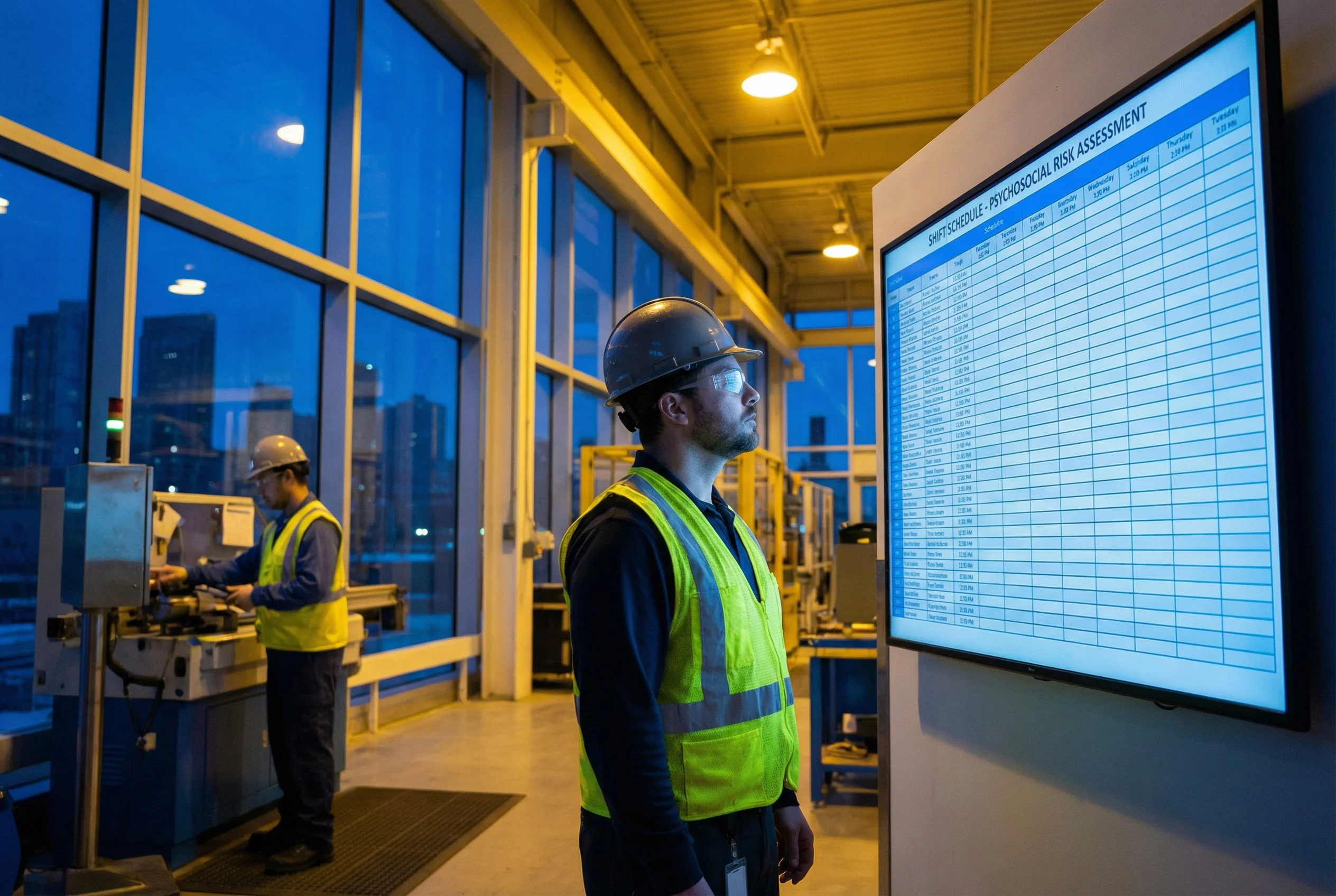
Shift work, especially rotating shifts and night work, is a recognised psychological stress factor. According to the German labour force survey, in 2023 around 15% of employees aged 15 and over in dependent employment worked at least occasionally in a shift system, and 9% worked at night between 11pm and 6am (Destatis, press release April 2025). The reference population is employees in dependent employment, not all working people including the self-employed.
Why is Shift Work Stressful?
- Working against the natural biorhythm
- Regular adjustment of sleep-wake times
- Difficulty maintaining social contacts and family life
- Restriction of leisure activities
Specific Stress Factors
1. Biological Stressors
- Sleep disorders: Daytime sleep is less restorative
- Fatigue: Especially during night shifts
- Health risks: Increased risk for cardiovascular disease, diabetes
- Digestive problems: Eating at unusual times
2. Social Stressors
- Less time with family and friends
- Difficulty participating in club activities
- Organizing childcare
- Relationship problems due to different rhythms
3. Work-Related Stressors
- Increased accident risk at night and when fatigued
- Fewer managers/contacts available in off-peak shifts
- Information gaps during shift changes
- Unequal working conditions by shift
4. Planning Uncertainty
- Short-notice shift schedule changes
- Covering for sick colleagues
- Difficulty planning private appointments
Conducting Risk Assessment for Shift Work
Special Requirements
- Longer survey period: practice recommendation 3-4 weeks so that every shift is reached. There is no normative requirement for this
- Mobile access: Enable smartphone participation
- Shift-specific questions: Capture different stresses by shift type
- Ensure anonymity: Small shift groups may allow identification
Additional Questions for Shift Workers
- How do you rate the current shift planning?
- Do you have sufficient recovery time between shifts?
- How does shift work affect your private life?
- Do you have sleep problems due to shift work?
- Do you feel safe during night shifts?
Effective Measures
Ergonomic Shift Schedule Design
The most important measure is optimizing the shift schedule:
- Forward rotation: Early → Late → Night (not reverse)
- Short rotation cycles: an ergonomic design recommendation, not a legal duty: as few identical shifts in a row as possible
- Sufficient days off: also a design recommendation: schedule several free days after a night shift block
- 11 hours rest time: maintain between shifts. This one is a legal duty under § 5 (1) ArbZG
- Planning certainty: Announce shift schedules early
Optimize Night Shifts
- Bright lighting at the workplace
- Opportunity for short breaks and power naps
- Healthy food options available at night
- Promote collegial support
Health Promotion
- Sleep hygiene counseling
- Nutrition advice for shift workers
- Sports offerings at flexible times
- Occupational health check-ups
Social Support
- Consider preferred shifts
- Childcare offerings
- Shift swap options
- Family-friendly shift models
Conclusion
Shift work cannot always be avoided – but its stresses can be reduced. Thorough risk assessment identifies critical points, and ergonomic shift planning is the most effective lever. SafeMind helps you reach all shifts and develop targeted measures.