
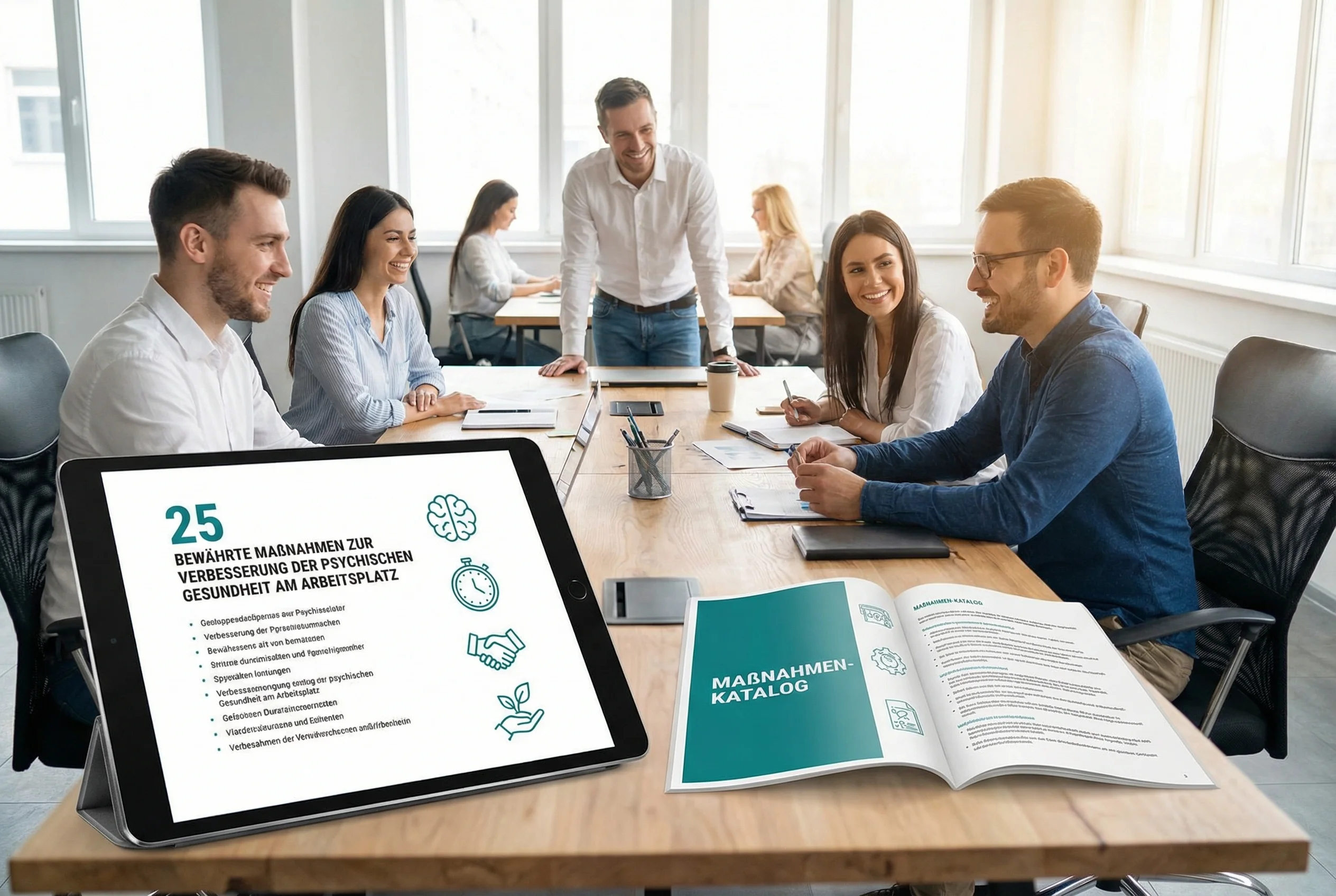
The TOP Principle for Effective Measures
When developing measures, the TOP principle applies: Technical and organizational measures take priority over personal measures.
Why This Order?
- Technical measures address the source of the stress
- Organizational measures change structures and processes
- Personal measures help individuals cope with remaining stress
Training alone is not enough – only the combination of all levels leads to sustainable improvements.
Technical Measures (T)
Improving the Work Environment
- Noise reduction: Sound barriers, quiet equipment, acoustic ceilings
- Optimize lighting: Daylight lamps, individual lighting, glare protection
- Improve room climate: Air conditioning, humidifiers, plants
- Ergonomic workstations: Height-adjustable desks, ergonomic chairs, monitor arms
- Set up quiet zones: Retreat spaces for focused work
Improving Work Equipment
- Software updates: Faster, more intuitive programs
- Dual monitors: Reduce window switching
- Headsets: Hands-free calling, better concentration
- Mobile devices: Enable flexible working
Organizational Measures (O)
Optimizing Work Organization
- Clear responsibilities: Update org charts, define accountabilities
- Optimize processes: Avoid duplicate work, simplify procedures
- Improve meeting culture: Meeting-free times, clear agendas, time limits
- Email rules: Define response times, reduce CC flooding
- Coverage arrangements: Clear vacation coverage, knowledge transfer
Designing Work Hours
- Flexible working hours: Flextime, trust-based working hours
- Home office options: Enable remote work
- Break regulations: Promote regular breaks, create break rooms
- Optimize shift planning: Sufficient recovery time, preferred shifts
Improving Leadership
- Regular employee meetings: Establish feedback culture
- Expand decision-making scope: Grant more autonomy
- Improve information flow: Transparent communication, regular updates
Personal Measures (P)
- Stress management seminars: Teach stress management techniques
- Leadership training: Train healthy leadership
- Coaching offers: Individual support for stressed employees
- EAP (Employee Assistance Program): Offer external psychological counseling
Quick Wins: Immediately Implementable Measures
You can implement these measures right away:
- Introduce a meeting-free day per week
- Communicate clear email guidelines
- Set up or upgrade the break room
- Team events to improve cohesion
- Consciously express praise and recognition
Successful Measure Implementation
Creating an Action Plan
Document for each measure:
- What: Concrete description of the measure
- Why: What problem is being addressed?
- Who: Responsible person
- When: Implementation deadline
- How: Required resources and steps
- Success: How do we recognize success?
Involving Employees
Measures developed together with those affected have significantly higher success rates. Use workshops for measure development.
Conclusion
The best risk assessment is useless without effective measures. Rely on a combination of technical, organizational, and personal measures – and measure their effectiveness. SafeMind helps you plan, track, and verify the impact of your measures.