Why Risk Assessment is Particularly Important During Change
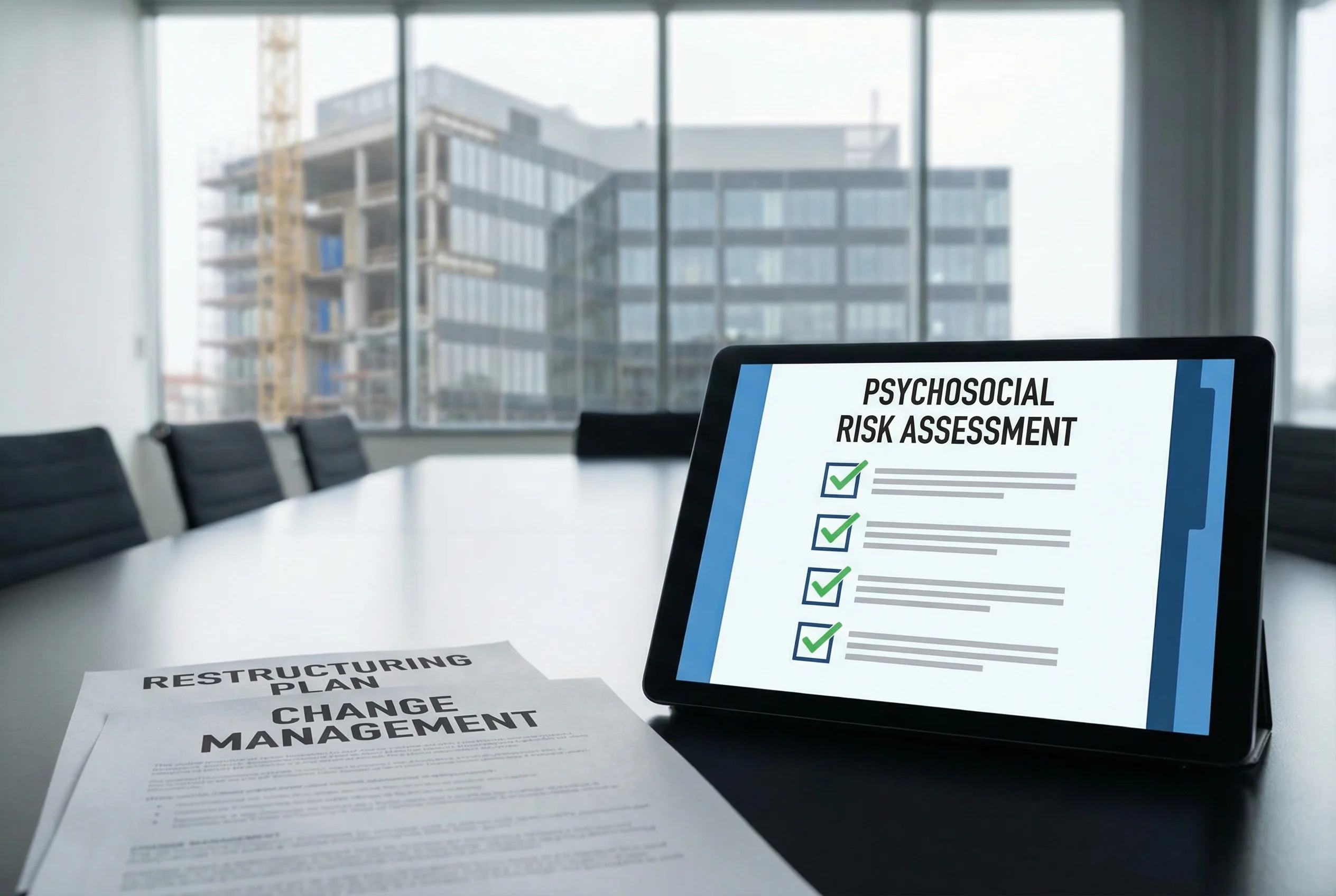
Restructurings, mergers, site closures or digitalization projects are high-risk phases for mental health:
- Uncertainty about one's own future
- New requirements and ways of working
- Loss of colleagues and established teams
- Often increased workload at the same time
Paradoxically, risk assessment is often neglected in such phases – "there's just so much going on right now." A mistake that can prove costly.
Typical Stress Factors During Change
1. Job Insecurity
- Fear of termination or transfer
- Unclear role after the change
- Concern about financial security
- Rumors and speculation
2. Loss of Control
- Decisions made "from above"
- Familiar structures disappear
- Feeling of powerlessness
- No ability to influence the process
3. Increased Workload
- Daily business plus change tasks
- Extra work due to staff reduction
- Training on new systems and processes
- Dual structures during transitions
4. Social Stress
- Separation from valued colleagues
- New team compositions
- Leadership changes
- Deteriorated work climate
5. Loss of Meaning and Value Conflicts
- Identification with company suffers
- Previous promises not kept
- Loss of trust in leadership
When to Conduct Risk Assessment?
BEFORE the Change
A baseline survey before changes begin:
- Documents the starting point
- Enables later comparison
- Identifies existing stressors
DURING the Change
Regular short surveys (pulse surveys):
- Early detection of critical developments
- Quick course correction possible
- Signal to employees: "We're watching out for you"
AFTER the Change
Final survey after stabilization:
- Evaluation of change impacts
- Identification of adjustment needs
- Lessons learned for future processes
Measures During Change Processes
Communication
- Inform early and honestly: Even when not everything is decided
- Regular updates: Avoid information vacuum
- Enable dialogue: Allow questions, take concerns seriously
- Counter rumors: Communicate actively and transparently
Participation
- Involve employees in design where possible
- Working groups for process design
- Set up feedback channels
- Closely involve works council
Support
- Training for new requirements
- Psychological counseling offers
- Train managers as contact persons
- Outplacement counseling for staff reductions
Work Organization
- Realistic planning of change tasks
- Relief from daily business for project participants
- Set clear priorities
- Avoid overload
Conclusion
Change processes are stressors – but with the right support, they can also be opportunities. Systematic risk assessment helps identify stressors early and take corrective action. SafeMind supports you with quick pulse surveys and automatic alerts.