Does Risk Assessment Apply to Home Office?
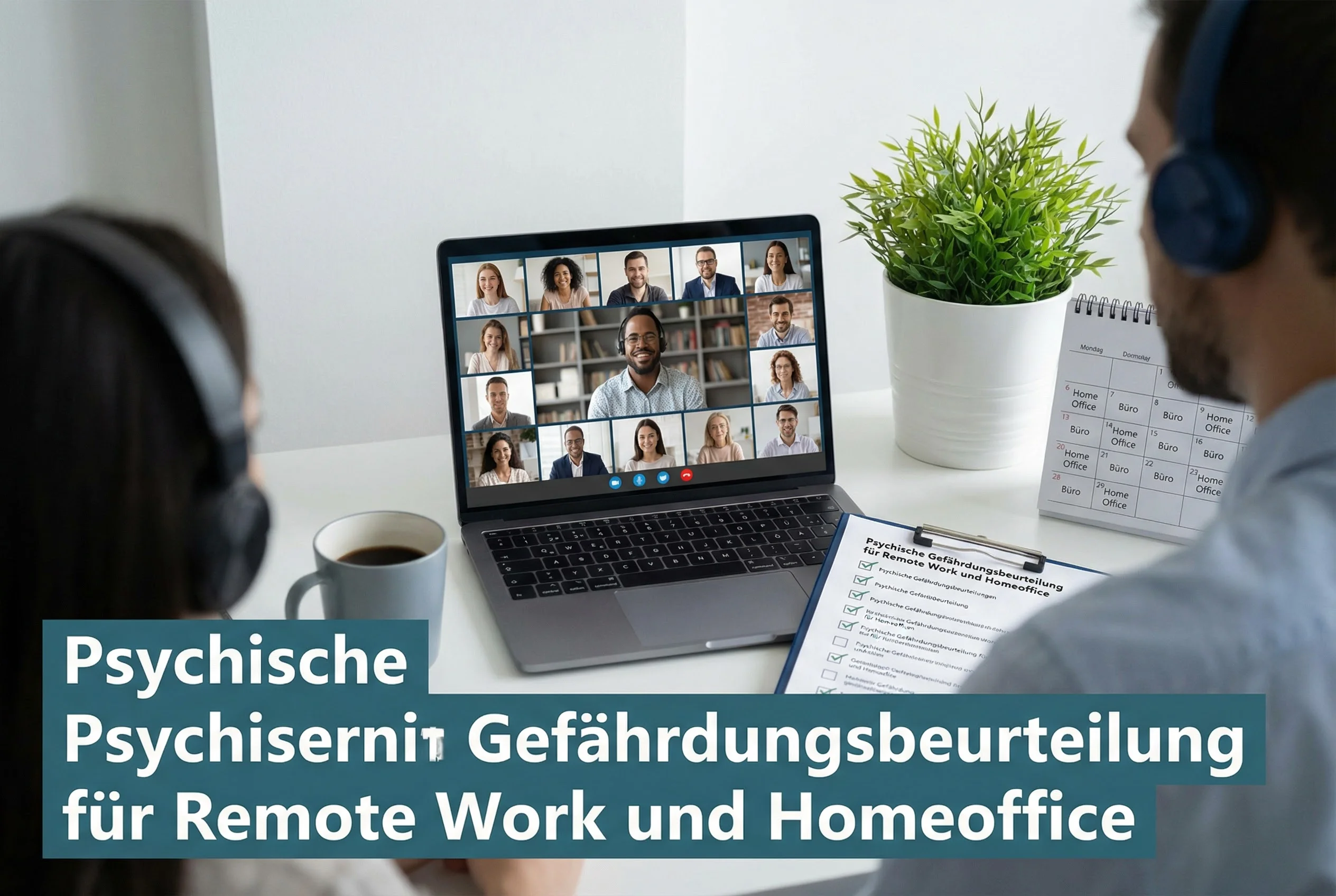
Yes, psychological risk assessment also applies to telework, home office and mobile work.
The Occupational Health and Safety Act does not differentiate by work location. Wherever employees work, conditions must be assessed – including in the home office or on the go.
Legal Foundations
- § 5 ArbSchG: Risk assessment for all activities
- Workplace Ordinance: Applies to telework stations (regular, set up by employer)
- Mobile Work: Less regulated, but risk assessment obligation exists
Special Stress Factors in Remote Work
1. Blurring of Work and Private Life
- Lack of spatial separation
- Constant availability
- Difficulty "switching off"
- Work-family conflicts
2. Social Isolation
- Less spontaneous exchange with colleagues
- Feeling of loneliness
- Reduced sense of belonging
- Missing informal communication
3. Technostress
- Permanent video calls ("Zoom fatigue")
- Technical problems without direct IT support
- Flooding through digital communication channels
- Fear of not keeping up technologically
4. Remote Leadership
- Less direct feedback
- Difficulty assessing workload
- Feeling of lacking support
- Uncertainty about expectations
5. Ergonomic Stress with Psychological Consequences
- Often suboptimal workplace equipment at home
- Lack of occupational safety consultation
- Lack of movement due to no commute
Conducting Risk Assessment for Remote Work
Method
For remote workers, these are particularly suitable:
- Online questionnaires: Can be completed regardless of location
- Video workshops: Joint analysis despite physical distance
- Virtual interviews: For in-depth discussions
Additional Questions for Remote Work
Supplement your survey with specific questions:
- How well do you separate work and private life?
- Do you feel adequately integrated into the team?
- How do you rate communication with supervisors?
- How is your home workspace equipped?
- Do you experience technostress?
Measures for Remote Workers
Against Boundary Blurring
- Clear rules on availability and working hours
- Establish "right to disconnect"
- No emails or messages outside working hours
- Promote conscious breaks
Against Isolation
- Regular presence days or team events
- Virtual coffee breaks
- Buddy systems for new employees
- Active conversation offers from managers
Against Technostress
- Define meeting-free times
- Question camera requirements in video calls
- Improve technical support
- Offer training on digital tools
For Better Remote Leadership
- Introduce regular 1:1 meetings
- Clear goal agreements
- Train managers in remote leadership
- Result orientation instead of presence culture
Special Case: Hybrid Working Models
With hybrid models (alternating between office and home office), additional challenges arise:
- Different information levels depending on presence
- Risk of "two-class society"
- Coordination effort for teams
Recommendations
- Clear rules when presence is expected
- Optimize hybrid meeting formats
- Improve documentation
- Ensure fairness between on-site and remote employees
Conclusion
Remote work is here to stay. Psychological risk assessment must reflect this reality. SafeMind enables seamless inclusion of all employees – no matter where they work.